
Why Experience Matters With Vintage Electronics
What comes in the door is a mixed bag.
Sometimes a unit is completely dead. At other times, it was sold as “working,” but it doesn’t actually function as it should. A lot of equipment is bought through online marketplaces with the expectation that it’s ready to use, only to discover problems once it’s powered up — or once it’s put into regular use.
Understanding What’s Really Going On
Before I can even think about how a unit is supposed to operate, I usually have to spend time figuring out what’s actually going on. That means sorting out whether it was misrepresented, partially working, previously modified, or affected by an attempted fix. In many cases, the first step isn’t repair at all — it’s verification.
A common situation is a unit that “sort of works.” It might play fine at low volume, but distort when pushed. It may behave normally when cold, then start acting up as it warms. Sometimes everything seems fine until a control is touched or a different input is used. These are the kinds of issues that don’t show up in a quick test, but they matter if the equipment is going to be used regularly.
When DIY Attempts Add Complexity
A lot of people try to save money by following a YouTube video. Sometimes that works. A lot of times it doesn’t. Without specific knowledge of how a particular brand or model behaves, it’s easy to create new problems while trying to solve the original one. What looked like a small issue can turn into a longer diagnostic process — and more time on the bench.
Why Brand and Model Knowledge Matters
Vintage electronics aren’t standardized the way modern equipment is. Different brands — and even different production runs of the same model — can behave very differently. Controls, tolerances, and circuit layouts all matter. Knowing what’s normal for a specific unit helps narrow down problems faster and prevents unnecessary adjustments that could create new issues.
A Real Example from the Bench
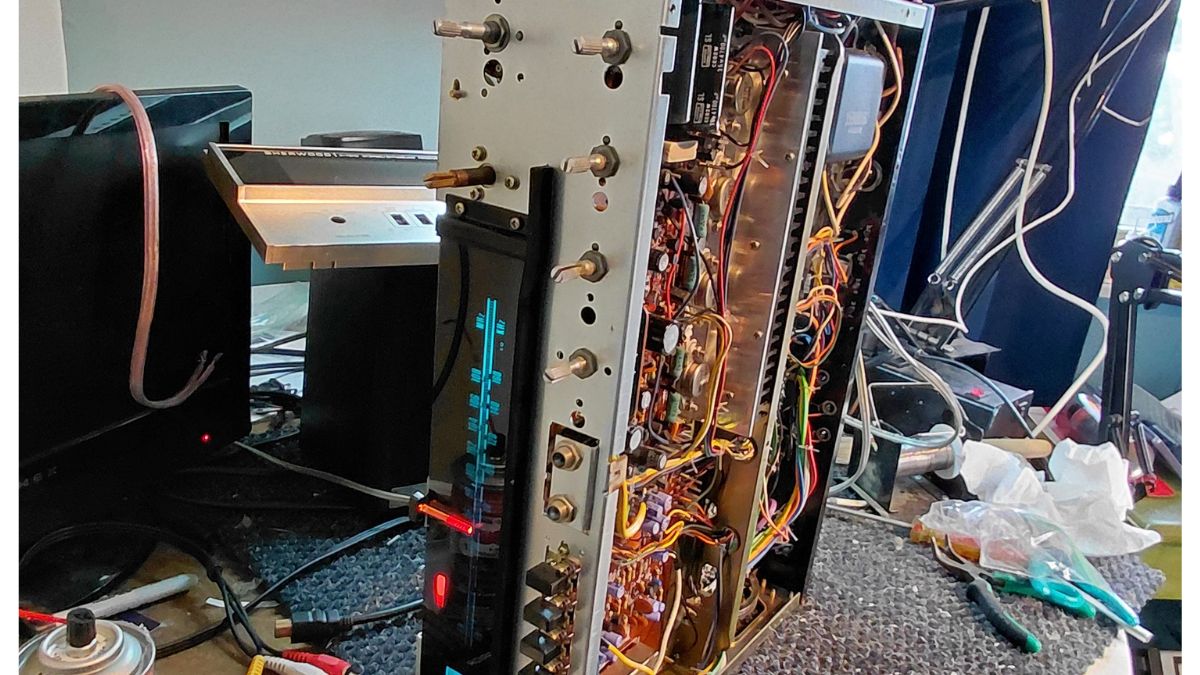
A recent example is a Sherwood S-7210 receiver that was on the bench. Like many units of that era, it came in with more than one issue to evaluate. One of the problems involved the on/off volume control — not something that was simply replaced, but repaired at the component level. Being able to do that requires understanding how the control is constructed, how it fails over time, and how it interacts with the rest of the circuit. Work like this isn’t about swapping parts until something works; it’s about addressing the actual failure while preserving how the unit was designed to function.
Judgment Comes with Time
When you’ve worked on enough of these units, you start to recognize patterns. You learn which behaviors are harmless and which ones are early warning signs. You also learn when not to push a unit further than it wants to go. A lot of damage doesn’t happen all at once. It happens when something delicate is stressed just a little too far, or when a shortcut seems fine in the moment.
Careful hands are important, but they’re not enough on their own.
Protecting the Equipment Long-Term
A big part of my job is making judgment calls. Not every option is a good option, even if it’s technically possible. Sometimes the best decision is the one that protects the unit long-term, not the one that looks impressive or promises quick results.
From a customer’s standpoint, that usually shows up as fewer surprises. It means realistic expectations, honest conversations, and work that’s done to keep the equipment stable and usable — not just “fixed for now.”
Vintage electronics don’t forgive guesswork. They reward patience, familiarity, and restraint. That only comes from time at the bench, seeing what holds up and what doesn’t.