
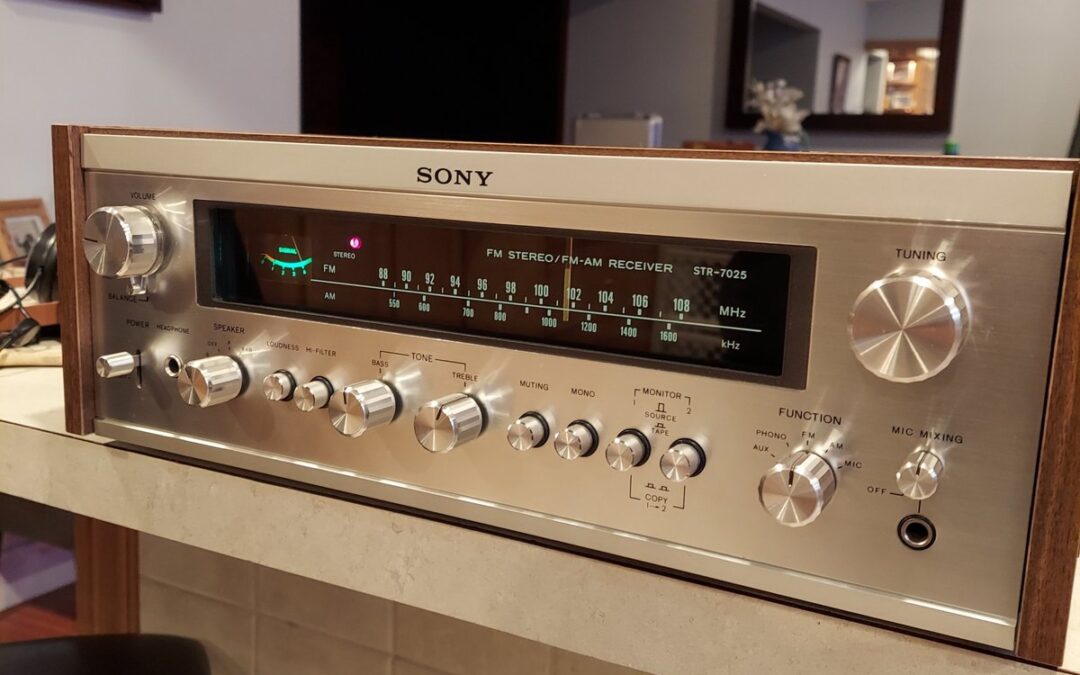
You pull out a vintage receiver you haven’t used in five years. You plug it in. It sounds… off. Not as clear as you remember. Maybe a hum. Maybe the bass is weak. Maybe the whole thing sounds muddy.
You haven’t done anything to it. Why does it sound different?
After 50+ years, I know exactly what changes vintage audio equipment over time. And I know which of those changes you can fix and which ones mean you need professional help.
Here’s what’s happening to your vintage equipment and what you can do about it.
Capacitor Aging
This is the #1 reason vintage equipment sounds different than it did years ago. Capacitors dry out.
Capacitors are filled with electrolytic fluid. Over decades, that fluid evaporates. The capacitor loses its electrical properties. Its capacitance drifts out of spec. The power supply becomes unstable. The sound changes.
You might hear: weak output, muddy bass, lack of detail in the treble, overall fatigue in the sound. It might sound like someone turned down the volume but didn’t actually turn the knob.
This is aging. It happens to every capacitor eventually. There’s no way around it. The equipment needs recap work, capacitor replacement. That’s a professional job. Typical capacitor failures are in the power supply, the main amplifier, and the preamplifier sections. Those are the most suspected areas.
Corrosion Building Up Inside
Moisture and dust get inside vintage equipment. Over years, corrosion builds on circuit board traces, component leads, and solder joints.
You might hear: intermittent crackling in one channel, weak output, sound that cuts out and comes back. Sometimes it gets worse when the equipment is cold and improves when it warms up. That can be noisy transistors, and it will sometimes be very intermittent.
Corrosion is a high-resistance path. Signal has to fight through it. Weak signal, distorted sound. As corrosion builds, the problem gets worse.
Fix: clean the circuit boards and connections, remove corrosion where possible, and potentially replace corroded components. That’s a professional job. A few hundred dollars depending on severity.
Connection Oxidation
The RCA jacks, speaker terminals, and power connections on your vintage equipment have oxidized. You can often see it: white or green buildup on the terminals.
You might hear: crackling when you wiggle the cable, no sound in one channel, intermittent dropout. Or the sound is weak and thin compared to what you remember.
This one you might be able to fix yourself. Use contact cleaner spray and a cloth to clean the jacks and terminals. Plug and unplug the cables a few times. That mechanical action helps break the oxide layer.
If that doesn’t work, a professional can clean the contacts properly. That’s usually fifty to two hundred dollars.
Speaker Deterioration
If you have built-in speakers or external speakers that came with your equipment, those have aged too.
Speaker cones can deteriorate. The surround that suspends the cone can crack. The spider (the part that centers the cone) can weaken. The voice coil can develop problems.
You might hear: reduced bass response, thin sound, distortion when you turn up the volume. Or one speaker might sound different from the other.
Speaker repair is possible but usually expensive. Often it’s cheaper to replace the speaker than to repair it. Depending on the quality level, that could be a hundred to five hundred dollars per speaker.
Dust and Grime Buildup
Dust coats your circuits and clogs cooling vents. The equipment might sound fine at low volume but distort or sound thin at higher volumes. Or it might shut itself down from overheating.
This one you can fix yourself. Blow out the dust with compressed air. Be careful not to touch anything inside. Let the equipment cool down after compressed air cleaning before you power it back on.
Often this simple cleaning helps sound quality recover. Not all the way, but noticeably better.
The Hum Problem
Your vintage equipment now has an audible hum through the speakers. The hum is constant, regardless of what you’re listening to.
Causes: a failing capacitor in the power supply, ground loop problems with your connections, or intermittent internal connections.
Quick fix: check your cable connections. Make sure you have a ground wire connected if applicable. Check that speaker connections are tight. Sometimes a loose connection creates a hum.
If that doesn’t fix it, the hum is likely power supply issues. That needs professional diagnosis and repair.
The Intermittent Crackling
You hear random pops and crackles. They’re worse when you adjust the volume knob or wiggle the cables.
Causes: dirty potentiometers inside the volume and tone controls, oxidized connections, or failing components.
Quick fix: turn the volume knob back and forth a bunch of times. Sometimes this action clears out internal oxidation. It might reduce the crackling.
If that doesn’t work, the equipment needs internal cleaning or component replacement. That’s a professional job.
The Frequency Response Problem
Your vintage equipment used to sound crisp and detailed. Now it sounds dull. The bass is weak. The treble is rolled off.
Causes: capacitor aging (most common), corrosion on the circuit board, speaker degradation, or connection problems.
This one usually requires professional diagnosis. It could be any of several problems, and you need to measure to know which one. A technician can run frequency response tests and pinpoint the issue.
When to Get Professional Help
Clean the connections yourself. Try compressed air on the dust. Check your cables and connections. Those are free or cheap fixes.
If the problem persists after that, you need professional help. A technician can diagnose what’s actually wrong and give you options for repair.
The good news: most of these problems are fixable. Your vintage equipment probably isn’t broken. It’s just aged. And age is usually fixable.
The Silver Lining
The fact that your vintage equipment is aging the way it is tells you something important: it was built well enough to last this long in the first place. Modern equipment wouldn’t make it 40 years still working at all.
Get the problems fixed, and you’ll probably get another 40 years out of it.
Noticed a change in your vintage equipment’s sound? Get in touch and we can set up an appointment.