
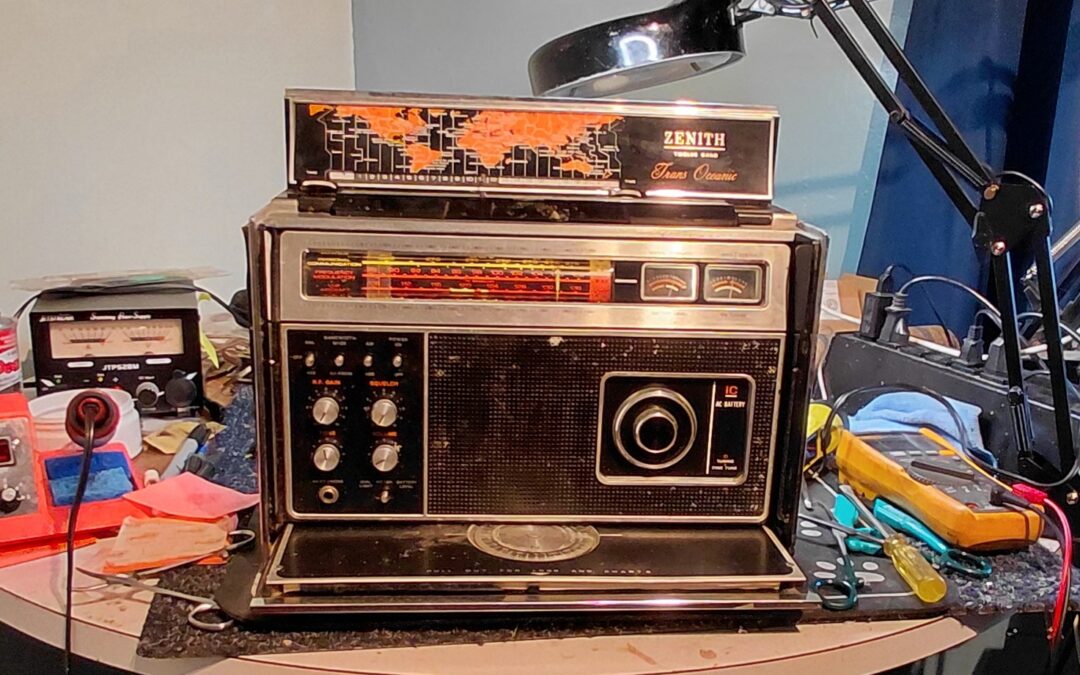
When customers drop off vintage electronics for repair, they rarely see what really happens behind the scenes.
From the outside, it can feel simple: you bring the unit in, we fix the issue, and you pick it up when it’s ready. But the most important part of the repair happens in the middle — and it’s the part most people never see.
Understanding what goes on behind the scenes helps explain why vintage electronics repair doesn’t follow a straight, predictable timeline.
Diagnosis Is Only the Beginning
When a unit first arrives, we start with the known issue. Maybe it won’t power on, has no sound, or isn’t working properly.
But vintage electronics rarely deal with just one problem.
These components are often 30–60+ years old. Over time, heat, aging parts, previous repairs, and long periods of storage all take their toll. As work begins, additional issues may surface that weren’t visible during the initial inspection.
This doesn’t mean something went wrong. It means the repair process is doing exactly what it should.
The Parts Hunt
One of the biggest differences between modern electronics repair and vintage repair is parts availability.
Many of the components used in vintage equipment haven’t been manufactured for decades. There is no warehouse full of replacements waiting on a shelf.
Finding the right part often involves:
Searching multiple specialty suppliers
Checking availability from trusted sources
Waiting on shipping or backorders
Testing replacement parts before installation
Occasionally, sourcing parts from donor units
Not every replacement part is equal, and quality matters. Using the right component helps ensure the repair lasts and performs the way it should.
This entire process happens quietly in the background, but it plays a huge role in every successful repair.
Repairs Don’t Happen in a Straight Line
Once parts arrive and repairs begin, the work still isn’t finished.
Vintage equipment needs to be carefully tested and observed. This often includes:
Running the unit through multiple tests
Allowing time for heat cycles and normal operation
Making adjustments as the equipment stabilizes
Re-testing to confirm consistent performance
Sometimes a repair reveals additional symptoms only after the original issue is resolved. This is normal with vintage electronics and is part of making sure the unit is reliable when it goes back home.
Why Quality Repair Is a Responsibility
When we perform a repair, we stand behind the work we’ve done. That responsibility means taking the time to do the job carefully and correctly.
Rushing a repair increases the risk of missed issues, unreliable performance, or repeat problems later. Careful testing and observation help protect your equipment and your investment.
Our goal is always to return equipment that performs as it should — not just for the moment, but for the long term.
Trusting the Process
We understand how exciting it is to get vintage equipment back in your system and enjoy it again. We also see firsthand how much care and passion go into this hobby when we attend events like the Vintage Electronics Expo.
The work that happens between drop-off and pickup may be invisible, but it’s where the most important part of the repair takes place.
We truly appreciate the customers who trust the process and value careful, quality repair work.