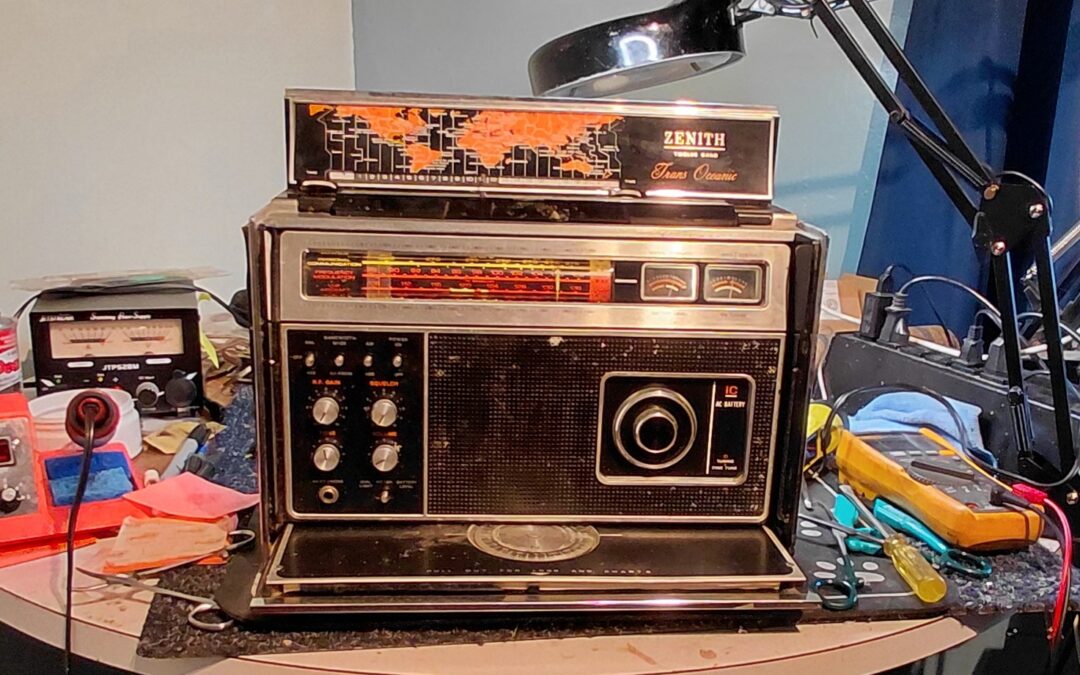
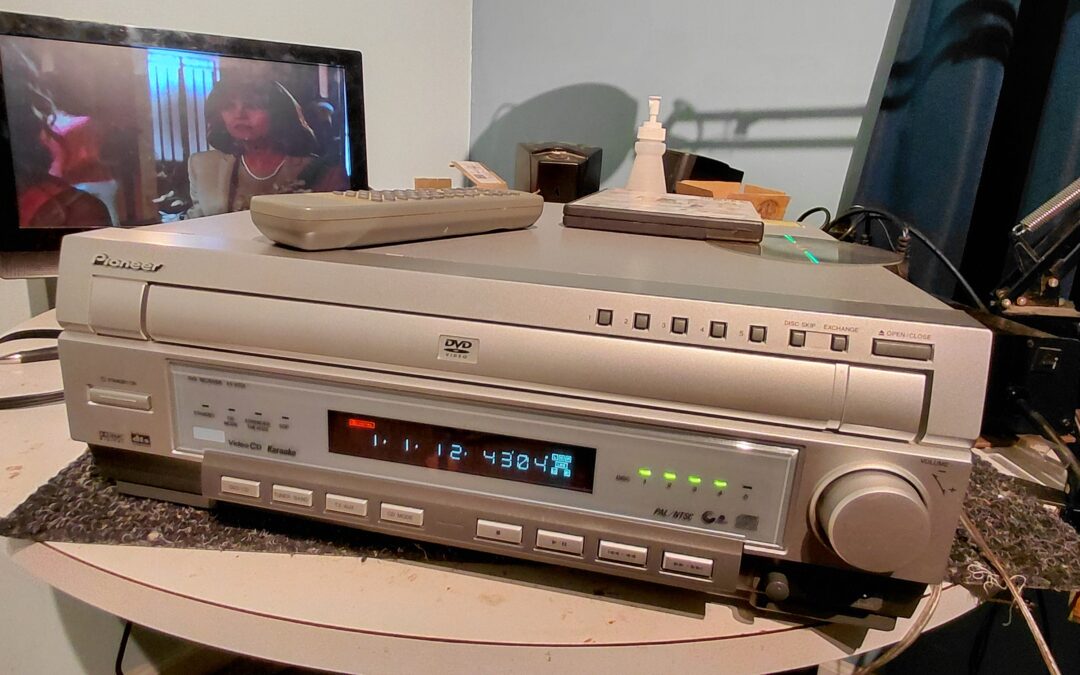
We work out of our home and take what we do seriously – and that means we put a lot of thought into how we handle every unit that comes through our door. Over time, we’ve developed a process that keeps things organized, protected, and accounted for at every step. We want to be transparent about what that looks like, and also share what we recommend on your end to make the whole experience as smooth as possible.
Transport & Drop-Off
Wrap it before the ride over. A blanket, towel, bubble wrap, or the original box all do the job. It doesn’t have to be elaborate – just enough to keep it protected on the way here. Scuffs and scratches from transport happen more than people think, and a little prep goes a long way.
When you get here, we do a condition check together at drop-off. We go over the unit with you so both of us are on the same page about its condition before any work begins. Any pre-existing marks or issues get noted right then. It’s a quick step that keeps things clear and honest for everyone – no guessing, no disputes.
While It’s With Us
Once your unit is in our hands, it’s got a process it follows while it’s here. If it comes in a box, it stays in that box. It comes out when we’re actively working on it, and goes right back in when we wrap up for the day or if we’re waiting on parts to come in. The box is its home while it’s with us, and we treat it that way.
For units that arrive without any covering, we still do what we can – carpet pads, towels, and cardboard help keep things separated and off surfaces that could cause problems. But we can only work with what we’re given.
Units that arrive protected stay protected. That’s the standard we hold ourselves to.
At Pickup
When your unit is ready, we’ll go over everything with you before you head out. What was done, how it’s looking, anything you should know. We also encourage you to do your own quick walkthrough before you leave – check it over, ask questions, make sure you’re completely satisfied. We want you walking out with confidence every single time.
The same goes for the ride home – wrap it back up the same way you brought it in. The work is done, but the unit still deserves a protected trip back.
The Bottom Line
We genuinely care about every unit that comes through here. This is our home and our craft, and we treat both seriously. The process we’ve put in place keeps things safe, organized, and accountable from the moment you drop off to the moment you pick up. The better it arrives, the better we can care for it. We appreciate every customer who trusts us with their gear. And when you take that extra step to wrap it up for the ride over, it helps us do our best work for you. Have questions before bringing something in? Reach out – we’re happy to walk you through it. Want to know what happens once your unit is in our hands? Here’s a look at what really happens in vintage electronics repair.
When customers drop off vintage electronics for repair, they rarely see what really happens behind the scenes.
From the outside, it can feel simple: you bring the unit in, we fix the issue, and you pick it up when it’s ready. But the most important part of the repair happens in the middle — and it’s the part most people never see.
Understanding what goes on behind the scenes helps explain why vintage electronics repair doesn’t follow a straight, predictable timeline.
Diagnosis Is Only the Beginning
When a unit first arrives, we start with the known issue. Maybe it won’t power on, has no sound, or isn’t working properly.
But vintage electronics rarely deal with just one problem.
These components are often 30–60+ years old. Over time, heat, aging parts, previous repairs, and long periods of storage all take their toll. As work begins, additional issues may surface that weren’t visible during the initial inspection.
This doesn’t mean something went wrong. It means the repair process is doing exactly what it should.
The Parts Hunt
One of the biggest differences between modern electronics repair and vintage repair is parts availability.
Many of the components used in vintage equipment haven’t been manufactured for decades. There is no warehouse full of replacements waiting on a shelf.
Finding the right part often involves:
Searching multiple specialty suppliers
Checking availability from trusted sources
Waiting on shipping or backorders
Testing replacement parts before installation
Occasionally, sourcing parts from donor units
Not every replacement part is equal, and quality matters. Using the right component helps ensure the repair lasts and performs the way it should.
This entire process happens quietly in the background, but it plays a huge role in every successful repair.
Repairs Don’t Happen in a Straight Line
Once parts arrive and repairs begin, the work still isn’t finished.
Vintage equipment needs to be carefully tested and observed. This often includes:
Running the unit through multiple tests
Allowing time for heat cycles and normal operation
Making adjustments as the equipment stabilizes
Re-testing to confirm consistent performance
Sometimes a repair reveals additional symptoms only after the original issue is resolved. This is normal with vintage electronics and is part of making sure the unit is reliable when it goes back home.
Why Quality Repair Is a Responsibility
When we perform a repair, we stand behind the work we’ve done. That responsibility means taking the time to do the job carefully and correctly.
Rushing a repair increases the risk of missed issues, unreliable performance, or repeat problems later. Careful testing and observation help protect your equipment and your investment.
Our goal is always to return equipment that performs as it should — not just for the moment, but for the long term.
Trusting the Process
We understand how exciting it is to get vintage equipment back in your system and enjoy it again. We also see firsthand how much care and passion go into this hobby when we attend events like the Vintage Electronics Expo.
The work that happens between drop-off and pickup may be invisible, but it’s where the most important part of the repair takes place.
We truly appreciate the customers who trust the process and value careful, quality repair work.
This will be our second time attending the Vintage Electronics Expo.
Getting ready for an event such as this starts well before the weekend itself. There’s time spent planning what to bring, making sure pieces can be demonstrated properly, and thinking through what’s needed so people can really experience the equipment — seeing it, hearing it, and watching it come to life.
All of that happens while regular work continues — drop-offs and pickups, repairs already in progress, parts being ordered, and making sure customers aren’t left waiting. The prep for the expo fits around the day-to-day work, not instead of it.
From there, it becomes a two-day commitment. The day before is spent renting a truck, loading up, making the drive, and getting set up. The following morning starts early, finishing up and getting ready before the doors open.
We’re willing to put that time in because events like this create a space that’s hard to find anywhere else. It’s one of the few times when people, equipment, and history all come together in the same room.
Being Around the Equipment — and the People
There’s something different about seeing this kind of equipment in person. Some pieces are familiar, others unexpected, but each one carries a past that isn’t always obvious at first glance.
What matters just as much are the people standing behind them.
For many owners, these pieces aren’t just electronics. They’re connected to memories, family members, or moments that still matter. Sometimes they’ve been part of someone’s life for decades. Sometimes they’ve been rediscovered after sitting quietly for years.
Those stories don’t always come out quickly, and they don’t always come out online. They tend to surface through conversation — when people feel comfortable enough to share them.
Why the Conversations Matter
Events like this bring together people who care about vintage electronics, but often for different reasons. Some are longtime collectors. Some are hobbyists. Some are simply trying to understand something meaningful to them.
A lot of the value comes from listening — how a piece was used, where it’s been, and why it still holds importance for the person talking about it. Being surrounded by others who understand that connection, and who respect it, makes a difference.
It’s a setting where people don’t have to explain why something matters to them. They’re among others who already understand. That shared respect creates conversations that feel open, unhurried, and genuine.
The Vintage Electronics Expo — January 31, 2026
We’ll be attending the Vintage Electronics Expo on Saturday, January 31, 2026, at the Oakland Expo Center in Waterford, Michigan. We’ll be there together as a family, taking it in, listening, and spending time with people who care about this equipment and the stories that come with it.
If you’re interested in attending or would like more details about admission, directions, or the schedule, you can visit the official event website: https://www.thevee.org/
We’re looking forward to being there — and to the conversations that happen when people feel heard and understood.
Sometimes a unit is completely dead. At other times, it was sold as “working,” but it doesn’t actually function as it should. A lot of equipment is bought through online marketplaces with the expectation that it’s ready to use, only to discover problems once it’s powered up — or once it’s put into regular use.
Understanding What’s Really Going On
Before I can even think about how a unit is supposed to operate, I usually have to spend time figuring out what’s actually going on. That means sorting out whether it was misrepresented, partially working, previously modified, or affected by an attempted fix. In many cases, the first step isn’t repair at all — it’s verification.
A common situation is a unit that “sort of works.” It might play fine at low volume, but distort when pushed. It may behave normally when cold, then start acting up as it warms. Sometimes everything seems fine until a control is touched or a different input is used. These are the kinds of issues that don’t show up in a quick test, but they matter if the equipment is going to be used regularly.
When DIY Attempts Add Complexity
A lot of people try to save money by following a YouTube video. Sometimes that works. A lot of times it doesn’t. Without specific knowledge of how a particular brand or model behaves, it’s easy to create new problems while trying to solve the original one. What looked like a small issue can turn into a longer diagnostic process — and more time on the bench.
Why Brand and Model Knowledge Matters
Vintage electronics aren’t standardized the way modern equipment is. Different brands — and even different production runs of the same model — can behave very differently. Controls, tolerances, and circuit layouts all matter. Knowing what’s normal for a specific unit helps narrow down problems faster and prevents unnecessary adjustments that could create new issues.
A Real Example from the Bench
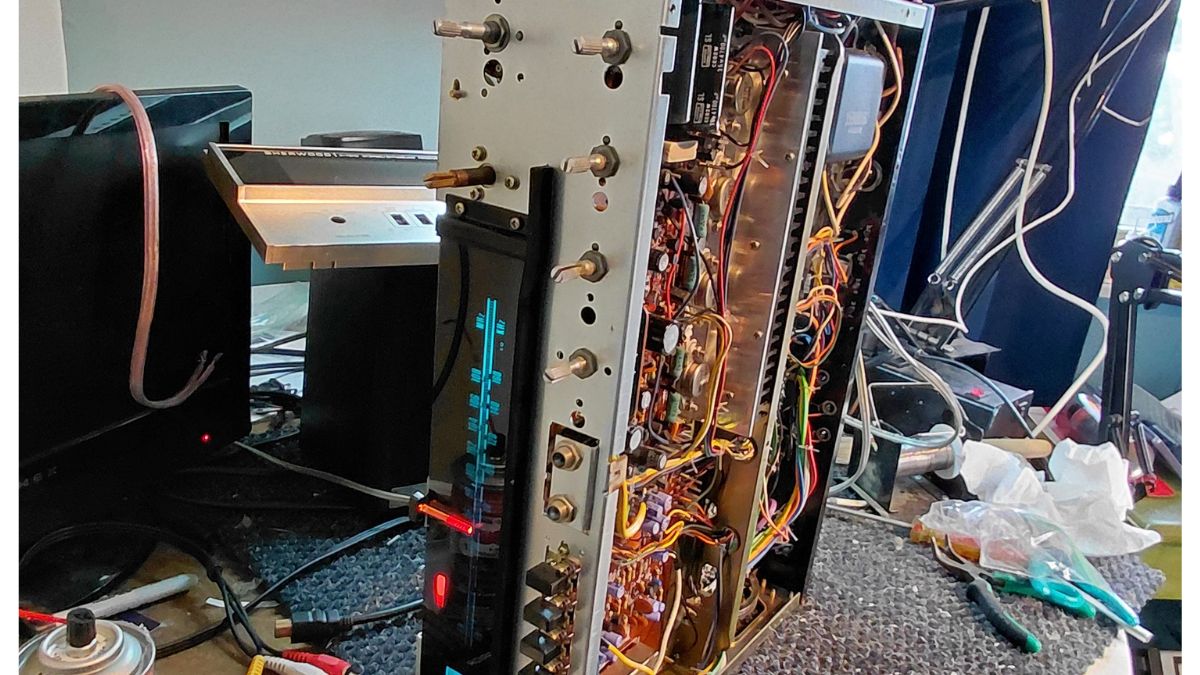
A recent example is a Sherwood S-7210 receiver that was on the bench. Like many units of that era, it came in with more than one issue to evaluate. One of the problems involved the on/off volume control — not something that was simply replaced, but repaired at the component level. Being able to do that requires understanding how the control is constructed, how it fails over time, and how it interacts with the rest of the circuit. Work like this isn’t about swapping parts until something works; it’s about addressing the actual failure while preserving how the unit was designed to function.
Judgment Comes with Time
When you’ve worked on enough of these units, you start to recognize patterns. You learn which behaviors are harmless and which ones are early warning signs. You also learn when not to push a unit further than it wants to go. A lot of damage doesn’t happen all at once. It happens when something delicate is stressed just a little too far, or when a shortcut seems fine in the moment.
Careful hands are important, but they’re not enough on their own.
Protecting the Equipment Long-Term
A big part of my job is making judgment calls. Not every option is a good option, even if it’s technically possible. Sometimes the best decision is the one that protects the unit long-term, not the one that looks impressive or promises quick results.
From a customer’s standpoint, that usually shows up as fewer surprises. It means realistic expectations, honest conversations, and work that’s done to keep the equipment stable and usable — not just “fixed for now.”
Vintage electronics don’t forgive guesswork. They reward patience, familiarity, and restraint. That only comes from time at the bench, seeing what holds up and what doesn’t.
As the year comes to a close, we wanted to share a bit about how our repair shop operates and why many repair appointments are now being scheduled into January. At Digital Vintage Classics, repairs are handled with care, intention, and respect for original equipment — and that approach naturally shapes our timeline.
Many people search for vintage electronics repair expecting quick turnaround times, but quality repairs often require patience, experience, and the right parts.
A Hands-On, One-Technician Repair Shop
Digital Vintage Classics is a small, specialized repair shop. All repair work is performed by Dan, our technician and co-owner, who handles each unit personally from evaluation through repair.
This is not an assembly-line operation. Every piece of equipment is assessed individually, and repairs are approached thoughtfully rather than rushed. This hands-on process allows Dan to work at the component level when needed, addressing the actual issue rather than applying temporary or generalized fixes.
Why Many Repairs Are Scheduling into January
As the year wraps up, demand for Dan’s work remains strong. Scheduling into January isn’t a slowdown — it’s a reflection of the time and attention each repair requires.
Rather than stacking work simply to move units through quickly, repairs are scheduled in a way that protects quality. Some equipment may sit for a period before work begins, depending on evaluation order, complexity, or parts availability. This approach ensures each unit receives the focus it deserves.
Staying True to the Original Design
When possible, Dan makes the effort to source authentic or manufacturer-correct parts rather than using low-quality substitutes that simply “fit.” Many customers appreciate repairs that stay as close to the original design as possible, since that originality is often what drew them to the equipment in the first place.
Finding the right part can take time — but it is a deliberate choice made in favor of long-term reliability, performance, and preserving the character of the equipment.
What to Expect Moving into the New Year
If you’re planning a repair, reaching out early is always helpful. January appointments are already being scheduled, and timelines can vary based on the type of equipment and the nature of the repair.
Clear expectations are important to us. Waiting for a repair does not mean your equipment is forgotten — it means it is being handled with care, patience, and respect for what makes it unique.
If you’re considering a repair in the new year, we encourage you to reach out early to discuss your equipment and next steps. You can also visit our Repair FAQ page to learn more about how our process works.